
If you have ever experienced burning, itching, redness, or irritation after using a personal lubricant, you are not alone. Studies suggest that a significant percentage of people experience some form of sensitivity to at least one common lubricant ingredient. The good news is that understanding the science behind lubricant formulations makes it much easier to find a product that works with your body rather than against it. This guide walks through the key factors that matter most for sensitive skin.
Why Sensitive Skin Reacts to Lubricants
The genital and intimate areas have some of the thinnest, most permeable skin on the body. The vaginal and rectal mucous membranes are especially absorbent, meaning that whatever is applied to them enters the tissue more readily than it would on your arm or leg. This heightened permeability means that irritating ingredients have a more pronounced effect in intimate areas. Sensitivity can be caused by direct chemical irritation (from ingredients that damage cells), allergic reactions (immune responses to specific compounds), or osmotic disruption (when a lubricant's concentration of dissolved substances draws water out of tissue cells, causing cellular damage and inflammation).
Ingredients to Avoid
- 1Glycerin (glycerol): While it is an effective humectant, glycerin is a sugar alcohol that can be metabolized by Candida yeast. People prone to yeast infections often find that glycerin-containing lubricants trigger flare-ups. It also contributes to high osmolality.
- 2Propylene glycol: Another humectant commonly used in lubricants. It is a known skin irritant at higher concentrations and can cause contact dermatitis in sensitive individuals. The European Union classifies it as a potential sensitizer.
- 3Parabens (methylparaben, propylparaben, butylparaben): These preservatives have been increasingly scrutinized for their potential endocrine-disrupting properties. While the science is still debated, many sensitive-skin formulas now exclude them entirely.
- 4Chlorhexidine gluconate: An antimicrobial preservative that can disrupt the vaginal microbiome and cause irritation. It is effective at preventing bacterial growth but can be harsh on delicate tissue.
- 5Nonoxynol-9: A spermicide sometimes included in lubricants. Research has shown it can damage epithelial cells and actually increase susceptibility to sexually transmitted infections by disrupting the mucosal barrier.
- 6Fragrances and flavors: Synthetic fragrances are among the most common causes of contact dermatitis. Even products labeled 'naturally scented' may contain essential oils that can irritate sensitive tissue.
- 7Warming or cooling agents: Capsaicin, menthol, and similar compounds deliberately stimulate nerve endings. For sensitive skin, this stimulation often crosses the line from pleasant to painful.
Understanding pH Balance
The vaginal environment normally maintains a pH between 3.8 and 4.5, kept acidic by Lactobacillus bacteria that produce lactic acid. This acidity is a key defense mechanism against infections. A lubricant with a pH significantly higher than 4.5 can temporarily raise vaginal pH, potentially disrupting the protective bacterial community and creating conditions favorable for bacterial vaginosis or yeast overgrowth. For sensitive skin, choosing a lubricant that is pH-balanced to match vaginal physiology is particularly important. Look for products that explicitly state their pH on the label or marketing materials. Products formulated with lactic acid or citric acid as pH adjusters tend to match vaginal chemistry more closely than those using sodium hydroxide or triethanolamine.
Osmolality: The Most Overlooked Factor
Osmolality measures the concentration of dissolved particles in a solution. The World Health Organization recommends that personal lubricants have an osmolality below 1200 mOsm/kg, and ideally below 380 mOsm/kg (which is iso-osmolar with body fluids). When a lubricant has very high osmolality (hyperosmolar), it creates an osmotic gradient that pulls water out of the cells lining the vaginal or rectal walls. This can cause cells to shrink, crack, and slough off, compromising the mucosal barrier and increasing vulnerability to infection. Many popular drugstore lubricants have been tested and found to have osmolality values exceeding 2000 or even 3000 mOsm/kg. Clean-formula products using plant cellulose as a thickener instead of glycerin or propylene glycol typically achieve much lower osmolality values. For sensitive skin, seeking out lubricants with published osmolality data or those specifically formulated to be iso-osmolar is one of the most impactful steps you can take.
What to Look For in a Sensitive-Skin Formula
- 1Short ingredient list: Fewer ingredients mean fewer potential irritants. Some of the best sensitive-skin lubricants contain as few as four to six ingredients.
- 2Plant cellulose or hyaluronic acid as the thickener: These create effective viscosity without the osmolality problems of glycerin or propylene glycol.
- 3pH between 3.8 and 4.5: Matching natural vaginal chemistry reduces irritation risk.
- 4Iso-osmolar or low osmolality: Below 380 mOsm/kg is ideal; below 1200 mOsm/kg is the WHO minimum recommendation.
- 5Preserved with gentle systems: Phenoxyethanol, potassium sorbate, and citric acid are generally well-tolerated preservative systems.
- 6Free from fragrances, flavors, colors, and warming or cooling agents.
- 7Dermatologically tested or clinically tested claims supported by patch testing data.

Silicone as a Sensitive-Skin Alternative
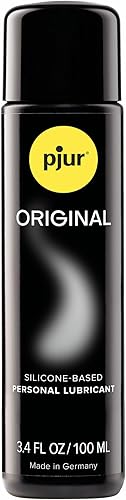
Medical-grade silicone lubricants deserve special mention for sensitive skin. Because silicone is chemically inert, it does not interact with vaginal flora, has no pH to disrupt, and has no osmolality to cause cellular damage. Silicone molecules are too large to be absorbed through skin, meaning they sit on the surface and create a protective barrier. For people who react to virtually every water-based formula they try, a pure silicone lubricant with no additives may be the ideal solution. The only limitation is the incompatibility with silicone toys, which can be addressed by using a water-based lubricant specifically for toy use.
Patch Testing at Home
Before using any new lubricant during intimacy, consider performing a simple patch test. Apply a small amount to the inside of your forearm and wait 24 hours. If no redness, itching, or irritation develops, apply a small amount to the outer vulvar area (labia majora) and wait another 24 hours. This two-step approach can identify both skin sensitivities and mucosal reactions before you use the product in a more vulnerable context. While not foolproof, patch testing significantly reduces the risk of an unpleasant surprise.
Key Takeaway
For sensitive skin, the three most important factors are a short, clean ingredient list free from glycerin, parabens, and fragrances; a pH between 3.8 and 4.5; and low osmolality below 1200 mOsm/kg. Medical-grade silicone lubricants are an excellent alternative for people who react to water-based formulas. Always patch test a new product before full use, and consult a dermatologist or gynecologist if irritation persists across multiple products.
Medical Disclaimer
The information provided in this article is for educational and informational purposes only and is not intended as medical advice. This content does not replace professional medical consultation, diagnosis, or treatment. Always seek the advice of your physician, obstetrician, midwife, or other qualified healthcare provider with any questions you may have regarding a medical condition, pregnancy, or treatment. Never disregard professional medical advice or delay in seeking it because of something you have read on this website. If you think you may have a medical emergency, call your doctor or 911 immediately. AdultLube.com does not recommend or endorse any specific tests, physicians, products, procedures, opinions, or other information that may be mentioned in this article. Reliance on any information provided by this article is solely at your own risk.
Legal Disclaimer
This article may contain affiliate links to products on Amazon.com. As an Amazon Associate, AdultLube.com earns from qualifying purchases made through these links at no additional cost to you. The inclusion of any product recommendations does not constitute a medical endorsement. Individual results and experiences may vary. The statements made in this article have not been evaluated by the Food and Drug Administration (FDA). Products mentioned are not intended to diagnose, treat, cure, or prevent any disease or medical condition. All product claims and recommendations are based on publicly available research, manufacturer information, and user reviews. AdultLube.com assumes no liability for actions taken based on the information in this article. Laws and medical guidelines may vary by jurisdiction. Consult with a licensed healthcare professional in your area for personalized advice.