You squeeze a new lubricant onto your fingertips, apply it where it matters most, and within seconds you feel it: a sharp sting, a creeping burn, or an uncomfortable warmth that was definitely not advertised on the bottle. If this sounds familiar, you are far from alone. Surveys suggest that as many as one in four people who use personal lubricants have experienced some form of irritation, and yet the topic rarely gets the honest conversation it deserves. The burning is not in your head, and it is not a sign that something is fundamentally wrong with your body. It is usually a sign that a specific ingredient or formulation does not agree with your unique tissue chemistry.
Understanding Why Vaginal and Vulvar Tissue Is So Reactive
The tissue lining the vaginal canal and covering the vulva is among the most absorbent in the entire body. Unlike the thick, multi-layered skin on your arms or legs, mucosal tissue is thin, highly vascularized, and designed to absorb substances quickly. Research published in the journal Contraception has shown that vaginal tissue can absorb certain compounds up to ten times more efficiently than skin elsewhere on the body. This is exactly why the tissue is so sensitive to chemical irritants. An ingredient that causes zero reaction on your hands can produce a strong burning sensation on mucosal surfaces. The tissue also has a carefully maintained pH environment, typically between 3.8 and 4.5, and anything that disrupts this balance can trigger discomfort.
Common Ingredients That Cause Burning
Not every ingredient that causes irritation does so for every person, but certain compounds are well-documented triggers. Understanding these can help you read labels more effectively and narrow down which formulas are most likely to feel comfortable for you.
- 1Glycerin: A humectant found in many water-based lubricants. While it provides a slippery texture, glycerin is a sugar alcohol that can feed yeast organisms. In higher concentrations, it can also create an osmotic imbalance that draws moisture out of cells, causing irritation and a burning feeling.
- 2Propylene glycol: Another common humectant used as a solvent and moisture-retention agent. Studies from the World Health Organization have identified propylene glycol as a potential irritant to mucosal tissue, particularly in concentrations above two percent.
- 3Chlorhexidine gluconate: A preservative with antimicrobial properties. While effective at preventing bacterial contamination of the product, it can disrupt the natural vaginal microbiome and cause contact irritation in sensitive individuals.
- 4Parabens (methylparaben, propylparaben): Used as preservatives to extend shelf life. Some people develop contact sensitivity to parabens, resulting in redness, swelling, and burning upon application.
- 5Fragrances and flavoring agents: Synthetic fragrance compounds are among the most common causes of contact dermatitis. Even products labeled with natural fragrances can contain dozens of individual chemical compounds.
- 6Nonoxynol-9: A spermicide sometimes included in lubricants. The World Health Organization has recommended against its routine use because it can cause epithelial disruption and increase susceptibility to infections.
The Role of Osmolality in Burning Sensations
One of the most important but least discussed factors in lubricant comfort is osmolality, which measures the concentration of dissolved particles in a solution. Your vaginal fluid has an osmolality of roughly 260 to 290 mOsm per kilogram. When a lubricant has a much higher osmolality, often called hyperosmolar, it pulls water out of the epithelial cells through osmosis. This dehydrates the tissue, damages the cell lining, and can produce that characteristic burning or stinging feeling. A 2012 study published in the journal PLOS ONE found that many commercially available lubricants had osmolality values several times higher than vaginal fluid, and those products were significantly more likely to cause epithelial damage in laboratory models. The World Health Organization recommends that personal lubricants have an osmolality below 1,200 mOsm per kilogram, and ideally below 380 mOsm per kilogram for products intended for vaginal use.
pH Mismatch: A Hidden Culprit
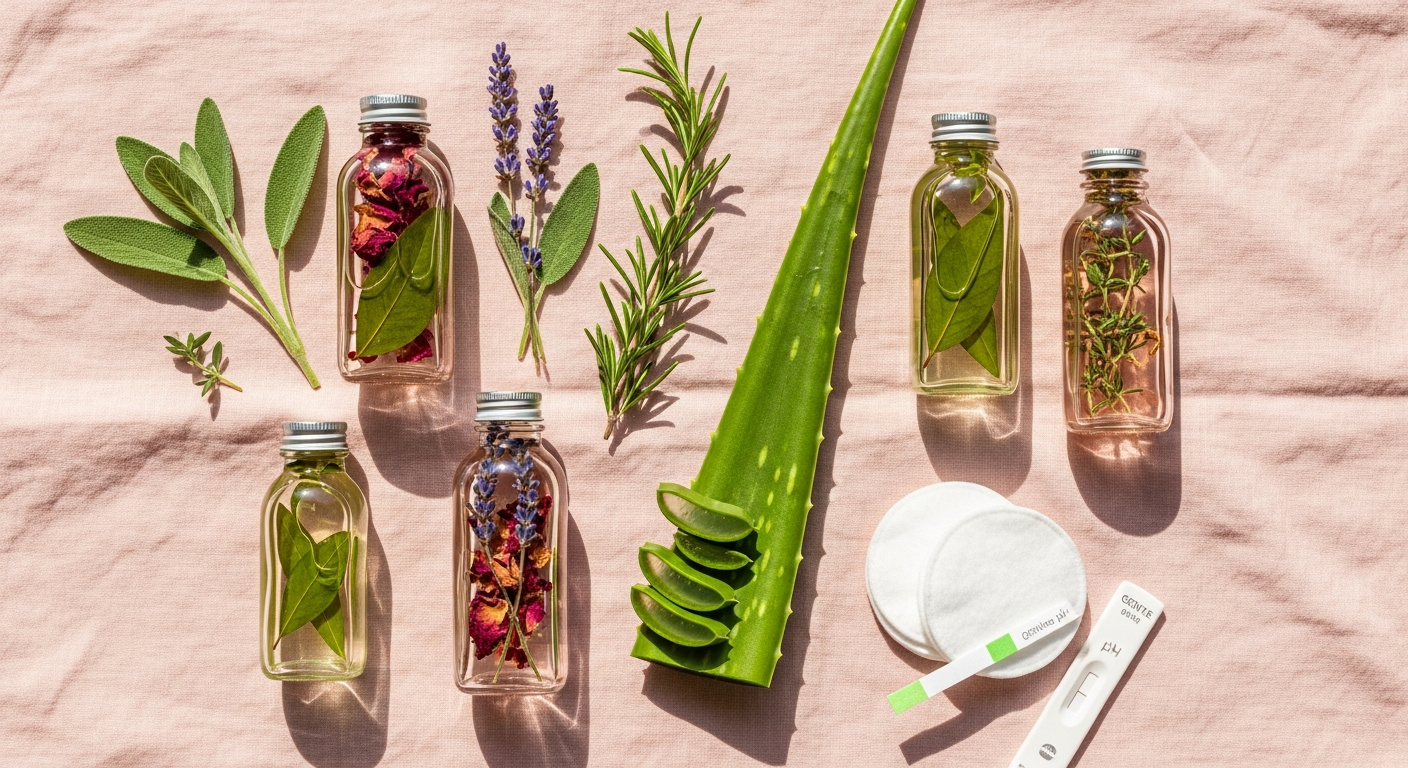
The healthy vaginal pH sits between 3.8 and 4.5, maintained by beneficial Lactobacillus bacteria that produce lactic acid. When a lubricant has a pH significantly outside this range, it can temporarily alter the vaginal environment. A product with a pH of 7 or higher, for example, can shift conditions enough to allow opportunistic organisms like Gardnerella vaginalis to flourish, potentially leading to bacterial vaginosis. Even before an infection develops, the pH disruption alone can cause a burning or uncomfortable sensation as the tissue reacts to the chemical change. Checking a lubricant's pH is not always easy since most brands do not print it on the label, but some manufacturers publish this information on their websites or in response to customer inquiries.

Allergic Reactions vs. Chemical Irritation
It is worth distinguishing between two different types of reactions. A chemical irritation is a direct tissue response to a substance and can happen to anyone if the concentration is high enough. It typically occurs during or immediately after application and resolves once the product is washed away. An allergic reaction, by contrast, involves the immune system. It may take repeated exposures to develop, can worsen over time, and may produce symptoms like swelling, hives, or persistent itching that lasts well after the product is removed. If you notice that a lubricant causes progressively worse reactions each time you use it, or if symptoms persist for hours after washing the area, you may be dealing with a true allergic response. In either case, discontinuing the product is the appropriate first step, and consulting a healthcare provider is recommended if symptoms are severe or do not resolve.
How to Find a Lubricant That Does Not Burn
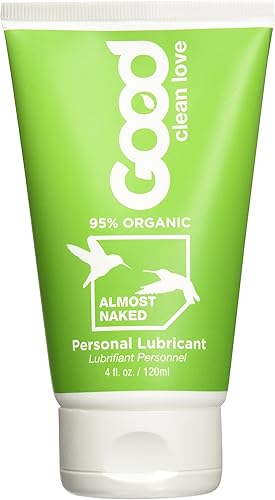
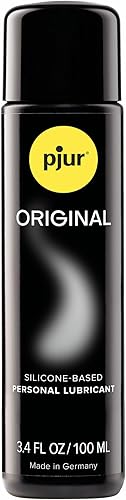
Finding a comfortable lubricant often involves a process of elimination, but there are evidence-based strategies that can speed things along. Start with products that have short, recognizable ingredient lists and are free from glycerin, parabens, fragrances, and propylene glycol. Look for formulas that advertise iso-osmolar or near-iso-osmolar properties. Water-based lubricants with a pH between 3.8 and 4.5 are generally the safest starting point for vaginal use. If water-based options continue to cause problems, medical-grade silicone lubricants are worth trying, since pure silicone formulas typically contain only two or three ingredients and do not interact with mucosal chemistry at all. Always patch-test a new product on a small area of the inner forearm or inner thigh before full use, and introduce only one new product at a time so you can identify which formula works for you.
Key Takeaway
Burning from a lubricant is your body signaling a chemical incompatibility, not a personal failing. The most common culprits are high osmolality, glycerin, propylene glycol, preservatives, and fragrances. Choosing a product with a short ingredient list, a pH between 3.8 and 4.5, and low osmolality dramatically reduces the risk of irritation. If burning persists across multiple products, consult a healthcare provider to rule out underlying conditions.
Medical Disclaimer
The information provided in this article is for educational and informational purposes only and is not intended as medical advice. This content does not replace professional medical consultation, diagnosis, or treatment. Always seek the advice of your physician, obstetrician, midwife, or other qualified healthcare provider with any questions you may have regarding a medical condition, pregnancy, or treatment. Never disregard professional medical advice or delay in seeking it because of something you have read on this website. If you think you may have a medical emergency, call your doctor or 911 immediately. AdultLube.com does not recommend or endorse any specific tests, physicians, products, procedures, opinions, or other information that may be mentioned in this article. Reliance on any information provided by this article is solely at your own risk.
Legal Disclaimer
This article may contain affiliate links to products on Amazon.com. As an Amazon Associate, AdultLube.com earns from qualifying purchases made through these links at no additional cost to you. The inclusion of any product recommendations does not constitute a medical endorsement. Individual results and experiences may vary. The statements made in this article have not been evaluated by the Food and Drug Administration (FDA). Products mentioned are not intended to diagnose, treat, cure, or prevent any disease or medical condition. All product claims and recommendations are based on publicly available research, manufacturer information, and user reviews. AdultLube.com assumes no liability for actions taken based on the information in this article. Laws and medical guidelines may vary by jurisdiction. Consult with a licensed healthcare professional in your area for personalized advice.